
2.Baigou, the Capital of Chinese Luggage: Core Advantages and Global Panorama of the Luggage Industry
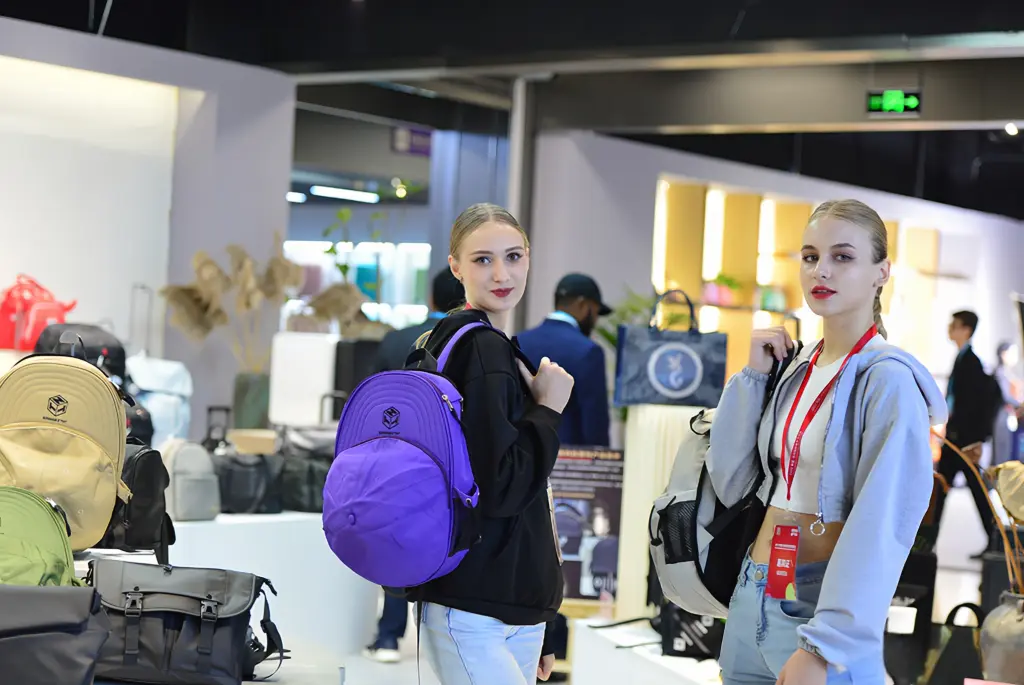
Located in the heart of the Beijing-Tianjin-Hebei coordinated development region, a small northern town, neither coastal nor bordering any other country, is reshaping the global luggage industry landscape at an astonishing pace. Baigou New City in Baoding, Hebei Province, certified by the China National Light Industry Council and the China Leather Industry Association as “China’s Luggage Capital,” has transformed from a humble roadside market into a billion-yuan-level industrial cluster producing 1 billion bags annually, with products exported to 200 countries and regions worldwide.
Industrial Scale and Full Industrial Chain Advantages: A Super Cluster Producing 1 Billion Bags Annually
The Baigou luggage industry has formed a complete industrial chain system encompassing raw material supply, product design, processing and manufacturing, and sales services.
A Vast Industrial Base and Market Share
Currently, Baigou boasts over 7,000 luggage manufacturing enterprises, linking 13 provinces and employing nearly 2 million people. In 2024, Baigou’s luggage and bag industry achieved an operating revenue of 47.1 billion yuan, producing 1 billion bags annually and offering over 2.5 million varieties and designs across all categories, holding approximately 30% of the domestic market share. This means that for every 10 bags sold nationwide, 3 come from Baigou.
A Top-Tier Professional Market Matrix
Baigou currently boasts 14 professional markets, covering a total area of over 3.1 million square meters and housing over 15,000 merchants. Its market share in the “Three Norths” region (Northeast, North, and Northwest China) reaches 65%, ranking fourth in China’s top 100 comprehensive commodity markets. It is not only a physical trading center but also a “barometer” of national luggage and bag transaction prices.
Plump Toys: A New Growth Pole for the Industrial Belt: Besides luggage and bags, Baigou is precisely targeting the plush toy market. Currently, Baigou has 185 plush toy manufacturers, with an annual output value of approximately 7 billion yuan and annual sales of approximately 10 billion yuan, becoming a new pillar of the industrial belt.
Cross-border Expansion Strategy: A Dual-Engine Approach of “Market Procurement + Cross-border E-commerce”
Faced with the vast opportunities of the global market, Baigou is actively expanding its international footprint, vigorously promoting the “lightweight export” of its luggage industry.
Export Scale Defies the Trend
Against the backdrop of a slowing global economic growth, Baigou’s luggage exports have delivered impressive results. In 2024, Baigou’s total exports reached 9.844 billion yuan (of which market procurement exports amounted to 8.907 billion yuan), a year-on-year increase of 24.31%, with products shipped to 200 countries and regions worldwide. From January to August 2025, Baigou’s pilot program saw cumulative customs declarations for exports reach 8.86 billion yuan, a year-on-year increase of 7.69%.
Policy Dividends of the “1039” Market Procurement Trade Method
Since being approved as a national pilot for market procurement trade in 2016, Baigou has significantly lowered the export threshold for small and medium-sized enterprises through a combination of policies, including VAT exemption, simplified customs procedures, and flexible foreign exchange collection. Currently, the Baigou pilot program has achieved national customs clearance integration, with the number of exit ports increasing to 68.
Innovation in Cross-Border E-commerce and Dedicated Logistics Lines: Baigou has been designated an “Asian E-commerce Industrial Belt Demonstration Base,” boasting over 40,000 e-commerce enterprises. By introducing official service providers to build a public service platform for cross-border e-commerce, Baigou enterprises can directly connect with global platforms such as Temu and SHEIN. Simultaneously, dedicated “market procurement + road transport” lines have been launched to destinations such as Vietnam and Almaty, improving logistics efficiency by 40% and reducing logistics costs by 25%.

